This is the official course blog of PHRU 1000-007, Philosophy of Human Nature, taught by Prof. Ashley U. Vaught at Fordham University, during the fall of 2009.
Wednesday, October 7, 2009
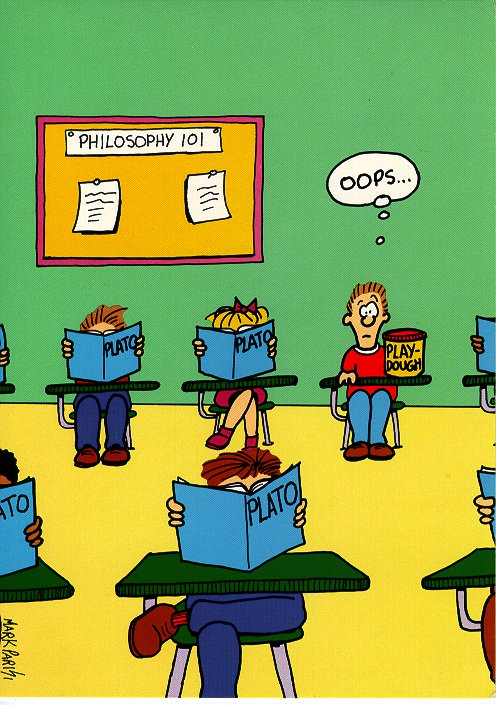
A STRESS RELIEF AFTER A HARD ESSAY
2 comments:
Anonymous
said...
HAHA. Thank you Mia for this wonderful contribution to our class blog. I'm glad that someone on this site has a sense of humor. Jezzz...
PHRU 1000-007, Philosophy of Human Nature Prof. Ashley U. Vaught
Course Description: The History of the Concept of Human Nature “The Philosophy of Human Nature” is an introductory course designed to provoke reflections on one of the issues dearest to the Jesuit theological tradition, namely, human nature. Our point of departure will be the United Nations’ “Declaration of Human Rights” (1948), which, although not composed by a group of philosophers, represents the most exhaustive contemporary statement on what rights belong to individual human beings, and, therefore, what a human is. In other words, the “Declaration of Human Rights” can tell us what it means to be a human and what is “human nature.” After reading the “Declaration” and talking about what it might mean, we will turn to the history of philosophy and consider the philosophical sources that shaped this document and our contemporary concept of “human nature.” That is, we are going to begin an archaeological dig into the origin of the concept of human nature. Our “excavation” will confront Plato’s early Socratic dialogues, Augustine’s account of free will, Descartes’ reconstruction of the cogito, philosophy and God, Rousseau’s critique of natural and civil right, in addition to the writings of other important philosophical thinkers.
Course Goals 1) The course will present you with a general knowledge of the ideas of all of the philosophers addressed, specifically in relation to the concept of human nature. That is, at the end of this course, you will be able to talk about these philosophers and their ideas; you will be able to see connections between those ideas and issues in our contemporary world; and you should be able to use basic philosophical vocabulary. 2) The course will help develop your skills in critical thinking. Critical thinking is a general term used to describe the mutually overlapping activities of reading, writing and discussion in an interrogative mode. At the end of this course, you will be able to use these skills, not only in philosophy courses, but also in all aspects of your life.
Course Requirements 1) Reading: you must do 10-50 pages of reading each week. Philosophical books and essays are likely unfamiliar to you. They can be difficult to read and understand, requiring much more concentration and attention than the newspaper or a novel. Please complete critical thinking exercise #1, available at fordham.blackboard.com, to learn how to read a philosophical text. 2) Attendance and participation: attendance is mandatory and will be recorded. More than three absences (excused or otherwise) will negatively affect your final grade (see below). Although the course shall generally assume a lecture format, you are expected to participate by asking questions during the lecture or contributing to discussion if a question is raised. Your participation is also calculated based on your completion of critical thinking exercises, which will be given approximately every two weeks, and the debate. 3) Blogging, essays and examinations: you must write one primary (400-500 words) blog entry, two blog comments (no more than 100 words), two essays (3-4 pages); two examinations will be given. Primary blog entries will address the week’s reading and comments will address the “primary” blog entries and course lectures/discussions. For each essay assignment, three topics will be offered from which the student shall select one. The midterm and final examinations will be composed of three sections, including identification, short answer and one short essay question.
Required Texts Plato, Last Days of Socrates (Penguin, 0140449280) Sophocles, Antigone (Hackett, 0872205711) Saint Augustine, On Free Choice of the Will (Hackett, 0872201880) René Descartes, Philosophical Essays and Correspondence (Hackett, 0872205029) Jean-Jacques Rousseau, Discourse on the Origin of Inequality (Hackett, 0872201503)
United Nations, “Declaration of Human Rights” (1948) Al-Farabi, The Book of Letters Joseph Albo, The Book of Principles Benedict de Spinoza, “Introduction” to the Theological-Political Treatise Bruno Bauer, “The Jewish Problem” Karl Marx, “On the Jewish Question” Hannah Arendt, “The Perplexities of the Rights of Man” Judith Butler, “Indefinite Detention” Jacques Rancière, “Who is the Subject of the Rights of Man?”
http://humannature--fordham.blogspot.com/
Course Schedule (page numbers in bold should be given special attention) Sept. 2nd: Introduction to the course Sept. 4th: The UN’s Declaration of Human Rights (1948) Sept. 8th: Plato, Euthyphro Sept. 9th: Euthyphro Sept. 11th: Plato’s Apology Sept. 15th: Apology Sept. 16th: Plato’s Crito Sept. 18th: Crito; Sophocles’ Antigone Sept. 22nd: Plato’s Phaedo, 57-70c; Antigone Sept. 23rd: Phaedo, 70c-86e; Antigone Sept. 25th: Phaedo, 87a-end; Antigone; first essay assigned Sept. 29th: Debate: Did Socrates, Antigone, deserve death? Sept. 30th: Augustine, Political Writings, pp. 58-70, 193-194, 203-212, 250-253 Oct. 2nd: Free Choice of the Will, Book One (1-5, 9-12,19) Oct. 6th: Free Choice, Book Two Oct. 7th: Free Choice, Book Two; first essay due Oct. 9th: Augustine, Political Writings, pp. 140-174 Oct. 13th: Class not held—University follows Monday schedule Oct. 14th: Al-Farabi, Book of Letters (1-4, 16-26) Oct. 16th: Joseph Albo, Book of Principles (242-244, 249-250) Oct. 20th: Midterm Exam
Oct. 21st: Descartes, Philosophical Essays, pp. 94, 97-100, 104 (first paragraph only of “Meditation One”), 212-213; Spinoza, “Introduction” to the Tractatus Oct. 23rd: Descartes, Philosophical Essays, pp. 2-7, 30-32, 46-60, 104-107, 222-232 Oct. 27th: Descartes, pp. 60-61, 107-113, 232-234 Oct. 28th: Descartes, pp. 60-64, 113-127, 234-242, 277-280 Oct. 30th: Descartes, pp. 127-132, 242-253, 273-274 Nov. 3rd: Descartes, pp. 32-41, 64-73, 84-86, 132-141, 253-272 Nov. 4th: Descartes, pp. 41-43, 297-315 Nov. 6th: Rousseau, Discourse on the Origin of Inequality, pp. 10-15 Nov. 10th: Rousseau, Part One (16-18, 25-27, 36-38) Nov. 11th: Rousseau, Part One Nov. 13th: Rousseau, Part Two (44, 49, 53-54, 56, 60, 65-66, 68-71) Nov. 17th: Rousseau, Part Two Nov. 18th: Bruno Bauer, “The Jewish Problem” Nov. 20th: Karl Marx, “On The Jewish Question” Nov. 24th: Marx Nov. 25th-27th: Thanksgiving Recess Dec. 1st: Arendt, “The Perplexities of the Rights of Man” Dec. 2nd: Arendt; Butler, “Indefinite Detention”; second essay assigned Dec. 4th: Butler Dec. 8th: Rancière, “Who is the Subject of the Rights of Man?” Dec. 9th: Rancière Dec. 11th: Debate: When human rights are not Dec. 15th: Review for the final exam; second essay due

2 comments:
HAHA. Thank you Mia for this wonderful contribution to our class blog. I'm glad that someone on this site has a sense of humor. Jezzz...
thanks Cody! you rock!
Post a Comment